
Archive note: This post was originally published on the WeChat Official Account "爱玩AI的医学生" (A Medical Student Who Loves Playing with AI). Installation methods and service versions keep changing — this post preserves the process as it stood at the time; when you actually install, please also check the tool's latest official docs. View the original WeChat post
Claude Code has been really popular lately, and its Skills feature has been getting a lot of attention too. I wanted to try Claude Code myself, but since my computer runs Windows and Claude Code is mainly built for Mac, installing it on Windows tends to run into all sorts of problems.
Even though the compatibility is a bit rough, it's still very much possible to install. I actually tried it myself today, ran into a fair amount of trouble along the way, but got it installed successfully in the end.
So I wanted to write these problems down ahead of time and share them with everyone. If you run into similar issues during installation, you can use this guide and work through the steps one by one.
Most Claude Code tutorials floating around on social media right now are written for Mac, and there's very little out there for Windows. So I specifically wrote this guide, combining it with the many problems I ran into during installation, hoping to give Windows users a more detailed Claude Code installation walkthrough. This guide can be run directly in the Windows terminal — you don't need any extra software that simulates a Mac environment. Some of you might not hit the same problems I did, in which case you can just breeze through the install. But if you run into the same issues I did, just follow my solutions step by step.
Setting up the installation environment
- You'll need a working VPN to get through this install.
- Step two is installing Node.js
On the Node.js website homepage, click to download the Node.js v22.13.0 LTS (Windows x64 .msi) installer.
(This is the current LTS — Long Term Support — version, the most stable one.)
- Install Git for Windows (it gives you a Unix-like command-line environment — you just need to have it on your machine)
Link: https://git-scm.com/install/windows
- To make your computer recognize this location, copy and paste the line below into PowerShell and press Enter (this line automatically adds C:\node to your system PATH):
- Step 1: Press Win + X
- In the menu that pops up, select "Terminal"
- Copy the code block below and press Enter (if there's no error, it worked)
[System.Environment]::SetEnvironmentVariable("Path", $env:Path + ";C:\node", "User")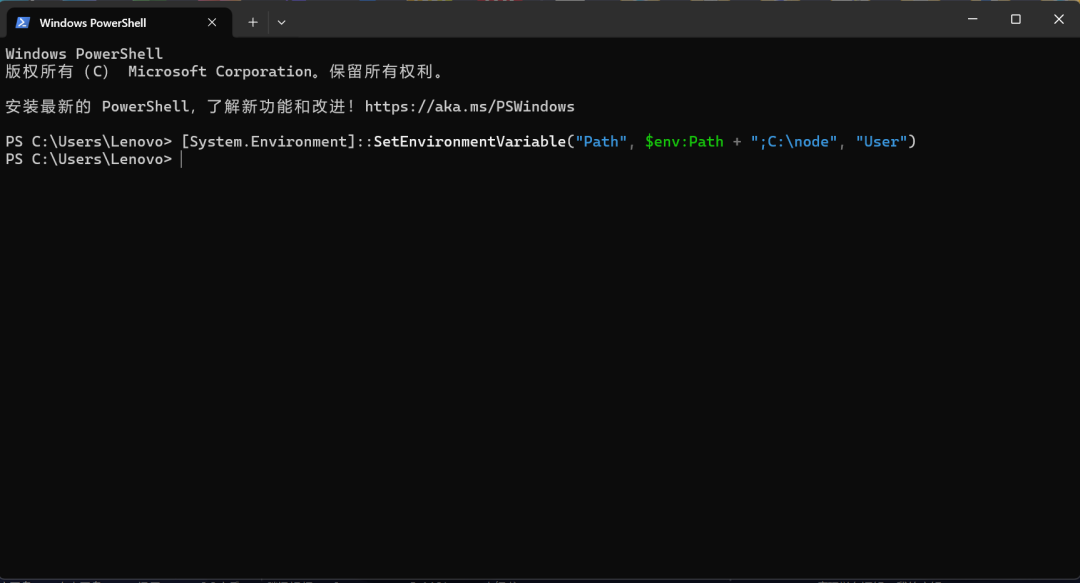
- Verify: close all the black/blue windows, open a fresh PowerShell, and type:
node -v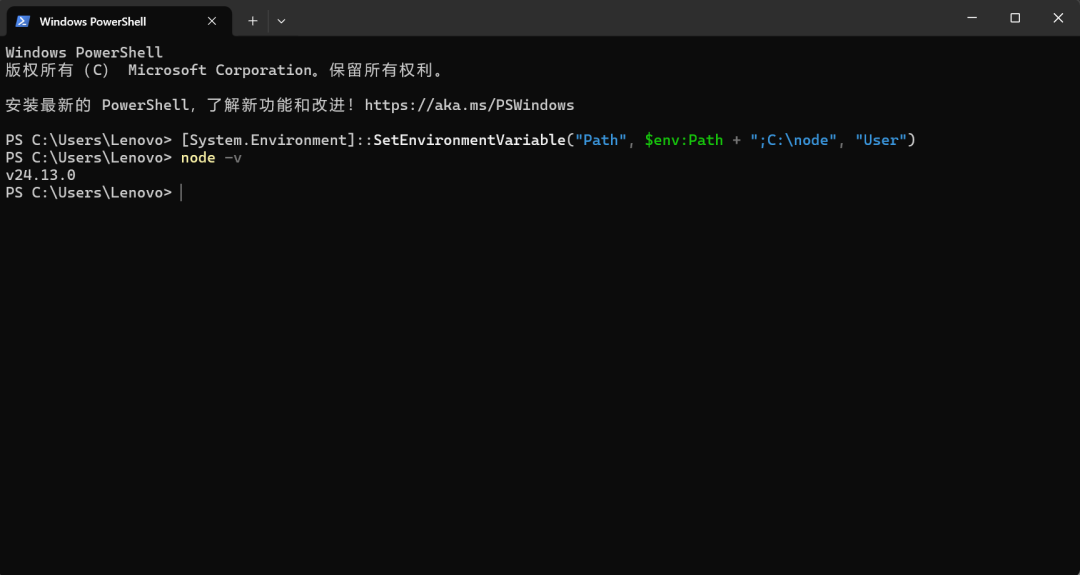
If a version number shows up, you're done!
I'll also walk through the specific problems I ran into during installation and how I solved them. If you don't hit these issues, feel free to skip this part.
Problems I ran into installing Node.js
Windows couldn't recognize the .msi file
After the file finished downloading, I found that my computer couldn't recognize the .msi file.

If double-clicking the downloaded file doesn't open it, you've hit the same problem I did.
Find the file you just downloaded — it's usually in the "Downloads" folder, and the filename should be node-v22.13.0-x64.msi.
Open the terminal: press Win + X and select "Terminal." (Whatever you do, don't pick "Terminal (Admin)." I tried it, and it seems like admin mode won't let you paste the file path.)
Enter the force-install command — follow these steps exactly, don't mistype:
- Type this in the window:
msiexec /i (note there's a space after /i)
msiexec /i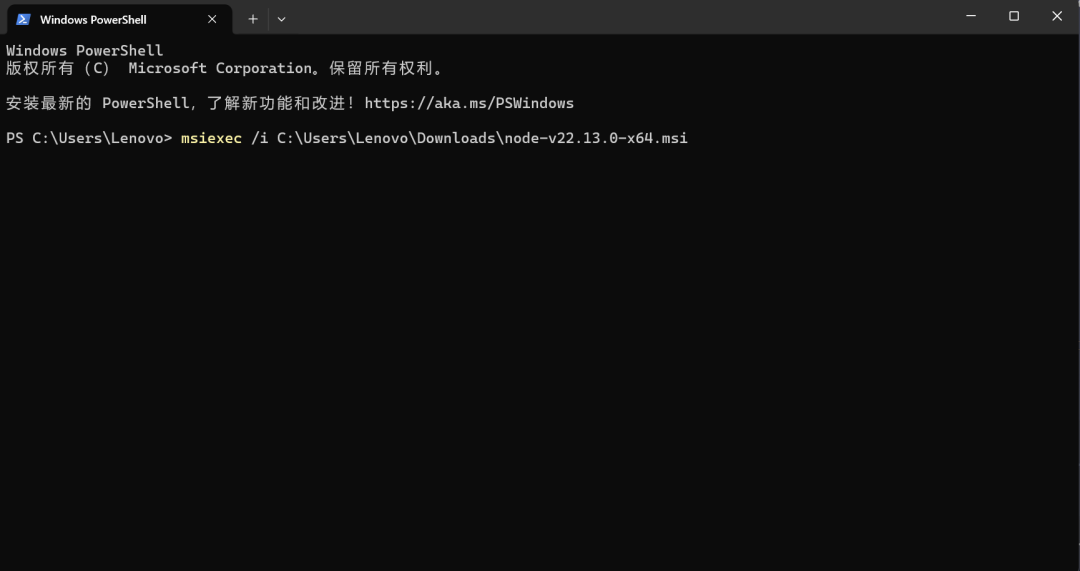
- Don't press Enter yet.
- Drag the downloaded .msi file with your mouse and drop it directly into the PowerShell window.
- (The window will automatically fill in the full file path.)
- Now press Enter.
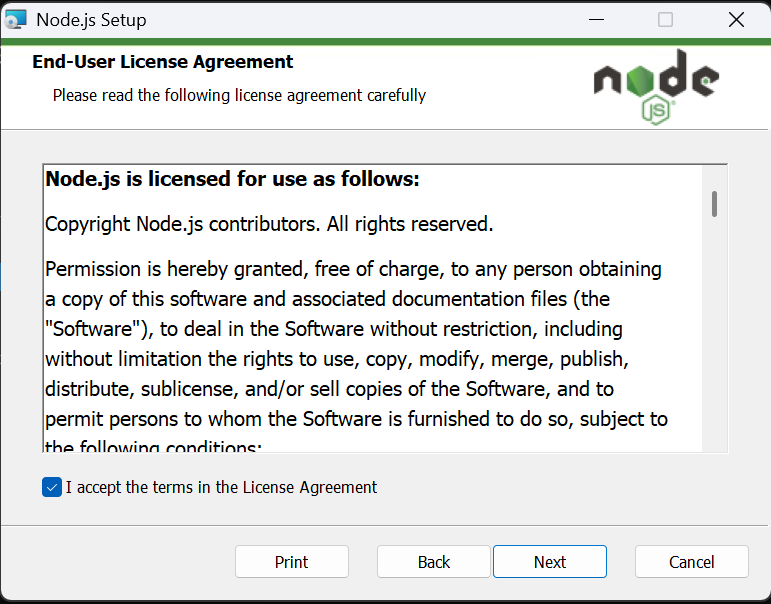
Expected result: an installer window should pop up immediately. If it does, just keep clicking Next until it's installed.
One-click environment configuration (key)
Installing Claude Code
- Open the terminal — press Win + X to open it — and copy the line below
npm install -g @anthropic-ai/claude-code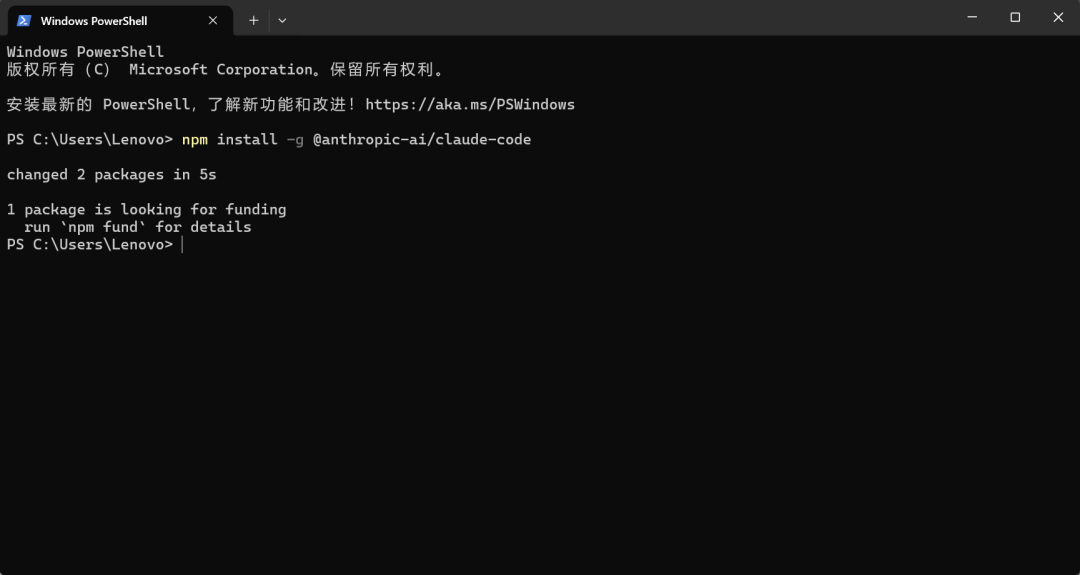
Once installed successfully, you'll see a screen like this.
- Claude Code is installed now, but let's not rush to open it yet.
We still need to reconfigure the environment, otherwise you'll hit an error like this.

Reopen the terminal and copy this line:
[System.Environment]::SetEnvironmentVariable("Path", $env:Path + ";C:\node", "User")After reconfiguring the environment variable, close all the current terminal windows to reset the environment, then open a new terminal and type this — if a version number shows up, the install worked:
claude --version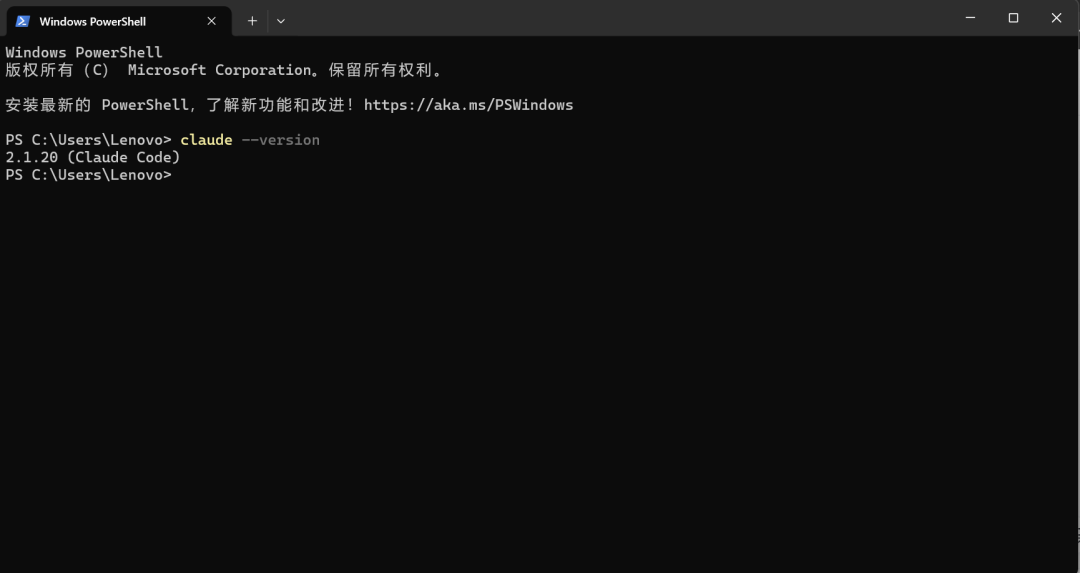
Next time, you can just open the terminal and type claude to get in. If you're asking whether there's an easier way — of course there is. I cover it later, in the one-click Claude Code launcher section.
Problems I ran into installing Claude Code
Let me show you the error I hit on my first download attempt:
bash: line 1: syntax error near unexpected token `<'
bash: line 1: `<!DOCTYPE html><!-- Last Published: Mon Jan 26 2026 23:02:49 GMT+0000 (Coordinated Universal Time) --><html data-wf-domain="website.claude.com" data-wf-page="68bd5cf2687bfe3893fd2b7f" data-wf-site="6889473510b50328dbb70ae6" data-wf-intellimize-customer-id="117902971" lang="en-US"><head><meta charset="utf-8"/><title>App unavailable in region | Claude</title><link rel="alternate" hrefLang="x-default" href="https://claude.com/app-unavailable-in-region"/><link rel="alternate" hrefLang="en-US" href="https://claude.com/app-unavailable-in-region"/><link rel="alternate" hrefLang="ja-JP" href="https://claude.com/ja-jp/app-unavailable-in-region"/><link rel="alternate" hrefLang="de-DE" href="https://claude.com/de-de/app-unavailable-in-region"/><link rel="alternate" hrefLang="fr-FR" href="https://claude.com/fr-fr/app-unavailable-in-region"/><link rel="alternate" hrefLang="ko-KR" href="https://claude.com/ko-kr/app-unavailable-in-region"/><meta content="Unfortunately, Claude isn&
#x27
;t available here." name="description"/><meta content="App unavailable in region | Claude" property="og:title"/><meta content="Unfortunately, Claude isn&
#x27
;t available here." property="og:description"/><meta content="https://cdn.prod.website-files.com/6889473510b50328dbb70ae6/68c469d23594abeb9ab6ee48_og-claude-generic.jpg" property="og:image"/><meta content="App unavailable in region | Claude" property="twitter:title"/><meta content="Unfortunately, Claude isn&
#x27
;t available here." property="twitter:description"/><meta property="og:type" content="website"/><meta content="summary_large_image" name="twitter:card"/><meta content="width=device-width, initial-scale=1" name="viewport"/><meta content="tPMMBQMBzgZlNmCBal5cMPAx3nhO2iyM4rT9nxuRcdk" name="google-site-verification"/><link href="https://cdn.prod.website-files.com/6889473510b50328dbb70ae6/css/claude-brand.shared.1dddabc52.min.css" rel="stylesheet" type="text/css" integrity="sha384-Hd2rxSfKxeGl/jYnvRN69JdzdY4kPs9IHbEEBPNZjg1o7nGmb540ludNoz8V7F6Q" crossorigin="anonymous"/><script type="text/javascript">!function(o,c){var n=c.documentElement,t=" w-mod-";n.className+=t+"js",("ontouchstart"in o||o.DocumentTouch&&c instanceof DocumentTouch)&&(n.className+=t+"touch")}(window,document);</script><link href="https://cdn.prod.website-files.com/6889473510b50328dbb70ae6/689f4a9aff1f63fde75cf733_favicon.png" rel="shortcut icon" type="image/x-icon"/><link href="https://cdn.prod.website-files.com/6889473510b50328dbb70ae6/68c33859cc6cd903686c66a2_apple-touch-icon.png" rel="apple-touch-icon"/><link href="https://claude.com/app-unavailable-in-region" rel="canonical"/><style>.anti-flicker, .anti-flicker * {visibility: hidden !important; opacity: 0 !important;}</style><style>[data-wf-hidden-variation], [data-wf-hidden-variation] * {'
curl: (23) Failure writing output to destination, passed 16384 returned 7
Roughly, what this error means is: even though I was using a VPN, Anthropic's servers still rejected my IP.
If you hit an error at this download step, just copy the error text and ask whatever AI tool you're using. If you get the same IP-rejected error I did, follow the fix below step by step.
First, you need to find your computer's port number — everyone's will be different, since it depends on which VPN tool you're using.
Here's how:
- Screenshot: send a screenshot of your VPN tool's interface to the AI.
- Identify: have the AI look at it and confirm the specific port number.
- Edit: in the code block below, just replace the port number with your own.
# 1. Set up the proxy
$Env:HTTP_PROXY="http://127.0.0.1:YOUR_PORT"
$Env:HTTPS_PROXY="http://127.0.0.1:YOUR_PORT"
# 2. Install Claude
npm install -g @anthropic-ai/claude-code
That should let you successfully install Claude Code.
Since the port needs to be reconfigured every time you open Claude Code, the "one-click launch" method here is a bit different from the normal-IP version.
I'll give you the .txt file content for the non-normal-IP case directly — for the rest of the steps, just follow the "one-click launch" method further down. Remember to replace YOUR_PORT in the file with your actual port number.
@echo off
:: Prevent garbled Chinese characters
chcp 936 >nul
echo ==========================================
echo Preparing to launch Claude Code...
echo ==========================================
:: 1. Automatically hook up the "life support" (proxy)
set HTTP_PROXY=http://127.0.0.1:YOUR_PORT
set HTTPS_PROXY=http://127.0.0.1:YOUR_PORT
echo [1/3] Proxy connected (Port: YOUR_PORT)
:: 2. Enter the "sterile operating room" (dedicated folder)
:: Automatically create and enter a Claude_Work folder on the desktop, to avoid security warnings
cd /d "%USERPROFILE%\Desktop"
if not exist "Claude_Work" mkdir "Claude_Work"
cd "Claude_Work"
echo [2/3] Entered safe workspace: Desktop\Claude_Work
:: 3. Wake up the brain
echo [3/3] Starting up, please wait...
echo ------------------------------------------
call claude
:: 4. Catch errors
if %errorlevel% neq 0 (
    echo.
    echo !!!!!!!!!!! Something went wrong !!!!!!!!!!!
    echo Please screenshot the error and send it to an AI
    cmd /k
) else (
    pause
)
Claude Code service plans
Since the official Claude Code often bans accounts and is fairly pricey, like Teacher Orange (橘子老师, a coding-content creator), I'd also recommend using Zhipu's coding plan instead. New Zhipu accounts get 20 million tokens for free after signing up, and adding their WeCom contact gets you another 20 million tokens on top of that. That's already plenty for a beginner to try it out.
Step 1
- Go to Zhipu's official website and sign up for an account.
I've already put together the link for you: https://bigmodel.cn/
Step 2:
- Click "Console" in the top right.
- Then click "API Key" in the top right.
- Find your API Key.
Step 3:
Create an API Key named Claude code, or just use your default API Key.
If you're planning to use it long-term, or you're a heavy Claude Code user, I'd recommend buying Zhipu's New Year coding plan — it's also pretty affordable and cheap.
Here's the link to buy this Zhipu plan.
Link: https://www.bigmodel.cn/glm-coding

Setting up the environment for Zhipu's Claude Code
Once Claude Code is installed successfully, we still need to configure the environment before it'll work.
We need one more tool here — copy the line below into the terminal and press Enter:
npx @z_ai/coding-helper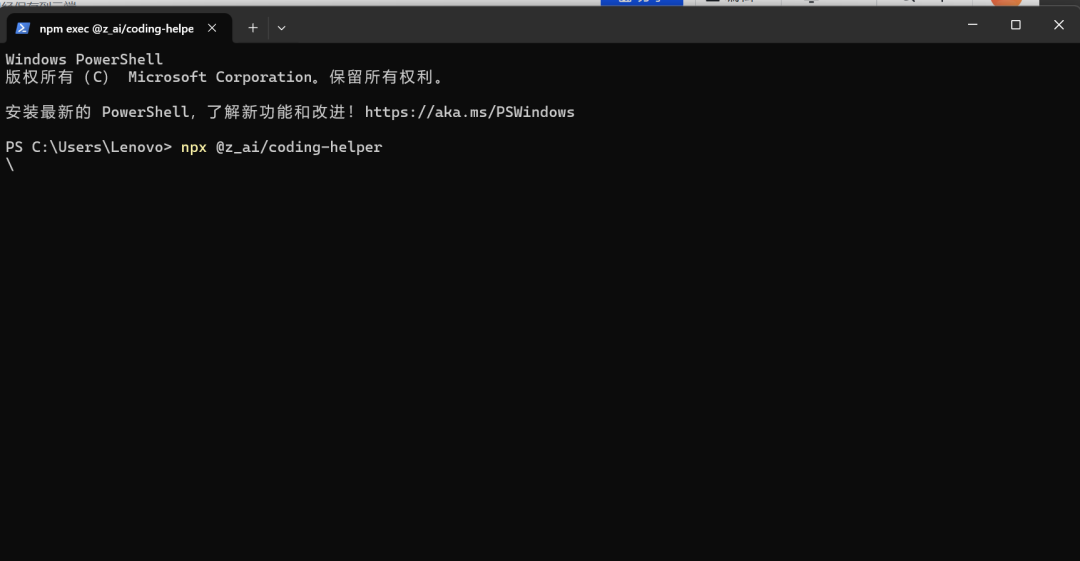
Once it finishes downloading, you'll see a screen like this.
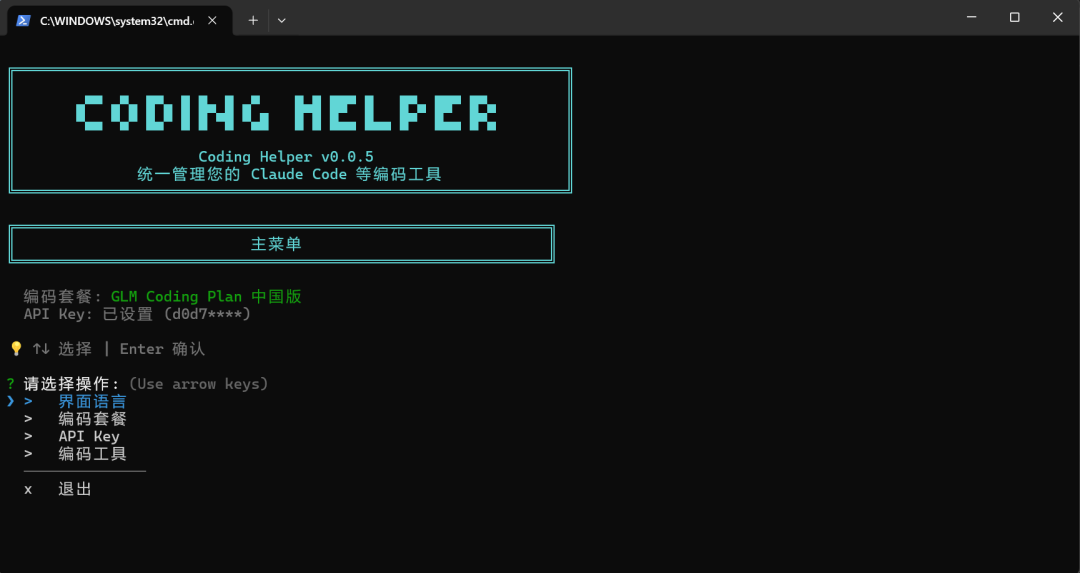
Change the interface language to Chinese here, then use the up/down arrow keys to select API Key, and press Enter.
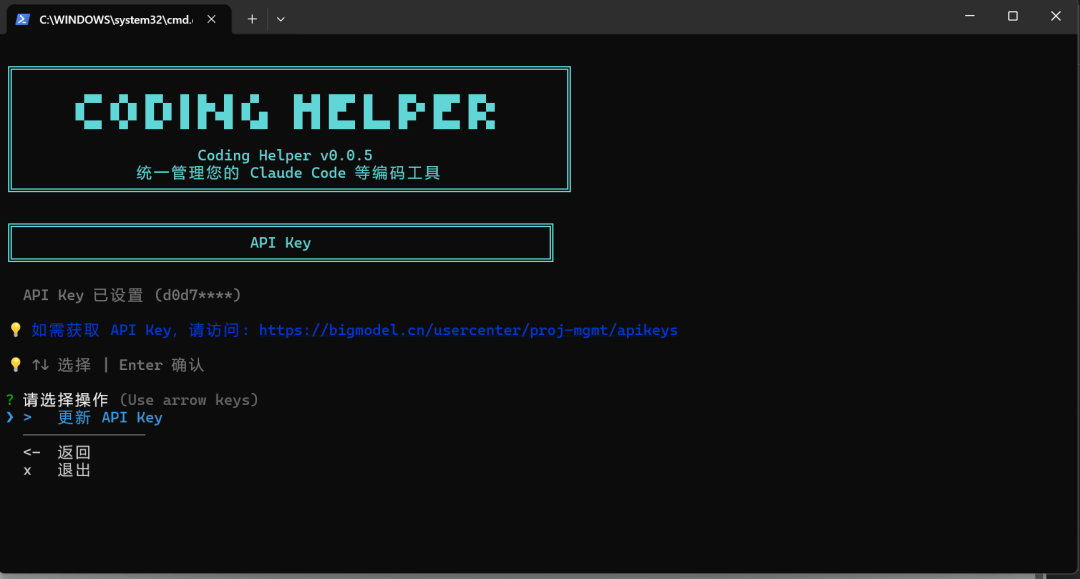
Since I'd already entered my API Key before, this screen shows up as "update API Key." At this point, copy the API Key you set up earlier, paste it in here, press Enter, then click the one-click Claude Code launcher we made earlier — and you're ready to go.
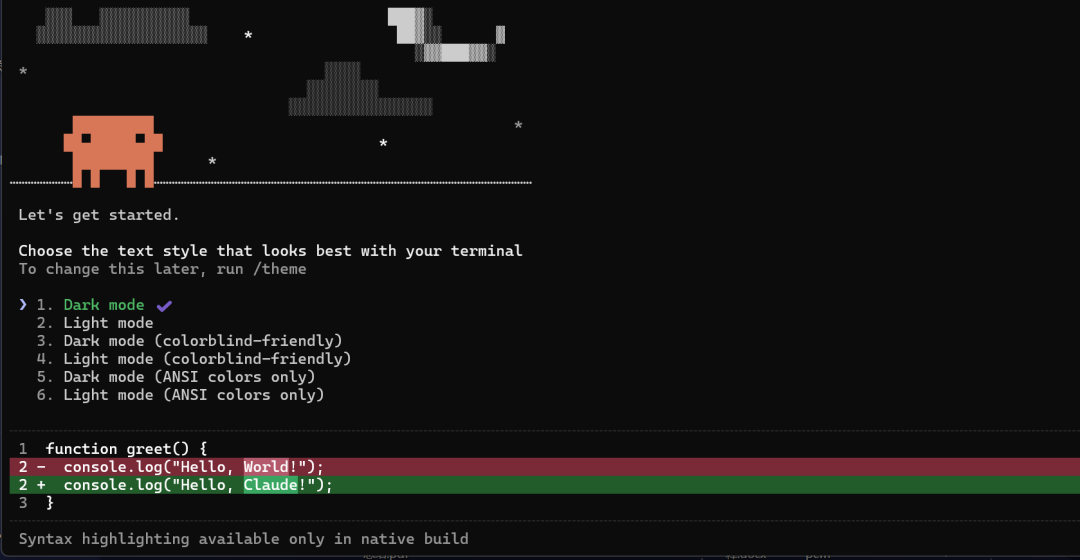
This screen asks you to pick which of the two yellow-green color schemes looks better. Use the up/down arrow keys to choose the one you like, press Enter, and you can start chatting with Claude Code right away.
A one-click desktop launcher for Claude Code on Windows
I'm guessing everyone finds it annoying to have to open a terminal every single time just to launch Claude Code. So here's the one-click method I personally use — once you've set it up following the steps below, you can open Claude Code just like any other app, by double-clicking a desktop icon.
Step 1: right-click on your desktop, create a new text document (.txt file), and copy the code below into it:
@echo off
:: Switch encoding to prevent garbled characters
chcp 65001 >nul
echo ==========================================
echo Launching Claude Code (direct-connection mode)...
echo ==========================================
:: 1. Automatically create and enter a dedicated workspace
:: (This prevents Claude from asking every single time whether it can access the desktop)
cd /d "%USERPROFILE%\Desktop"
if not exist "Claude_Work" mkdir "Claude_Work"
cd "Claude_Work"
echo [Status] Entered safe workspace: Desktop\Claude_Work
:: 2. Launch
echo ------------------------------------------
call claude
:: 3. Keep the window open on error (if something goes wrong, the window stays open so you can see the error)
if %errorlevel% neq 0 (
    echo.
    echo [Error] Failed to launch. Please check your network or installation.
    pause
)
This script launches Claude Code with one click and also automatically creates a working folder, so you don't have to manually approve desktop access permissions every single time.
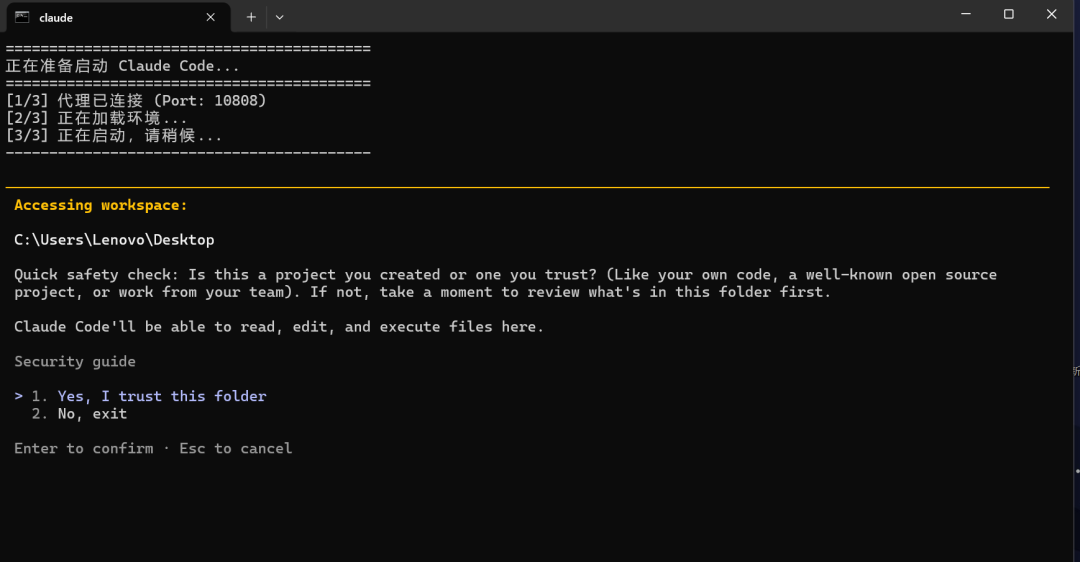
Step 2: you need to save the text document as ANSI format (the text document's default UTF-8 format will crash) as a .txt file
- Click "File" in the top left.
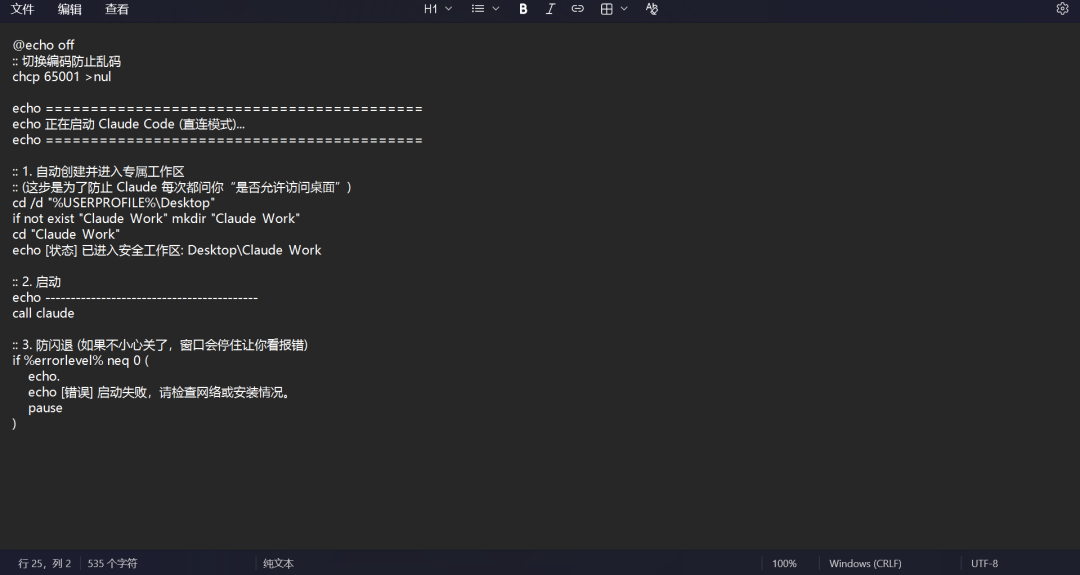
- Choose "Save As," and pick the file format shown in the screenshot.
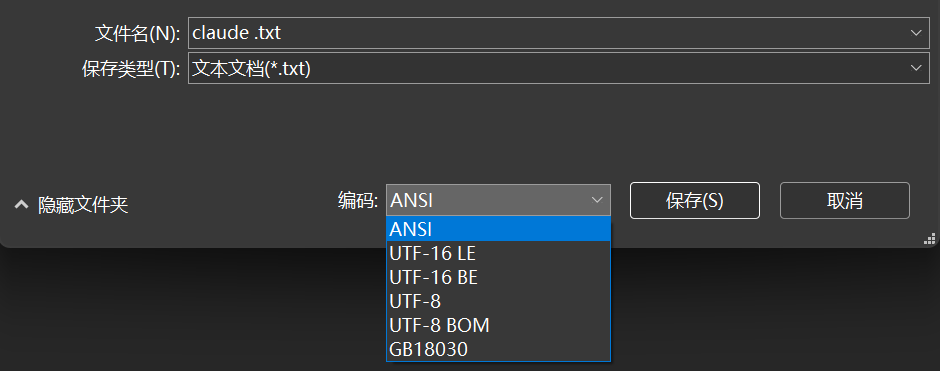
- Change the file extension from .txt to .bat.
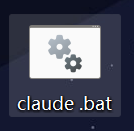
Once you've done all of that, whenever you want to use Claude Code, just double-click this .bat file to launch it in one click.
Wrap-up
That's my beginner's guide to installing Claude Code on Windows. I've only covered some of the problems I personally ran into during the install. You might run into all kinds of other issues along the way — if you can't figure something out, feel free to ask me in the comments, and I'll do my best to walk you through it. I'm not a trained programmer myself, and this was actually the first time I'd ever installed Claude Code.
So I really do get how frustrating it can feel when you hit a wall during installation.
If I see your message, I'll try to reply.